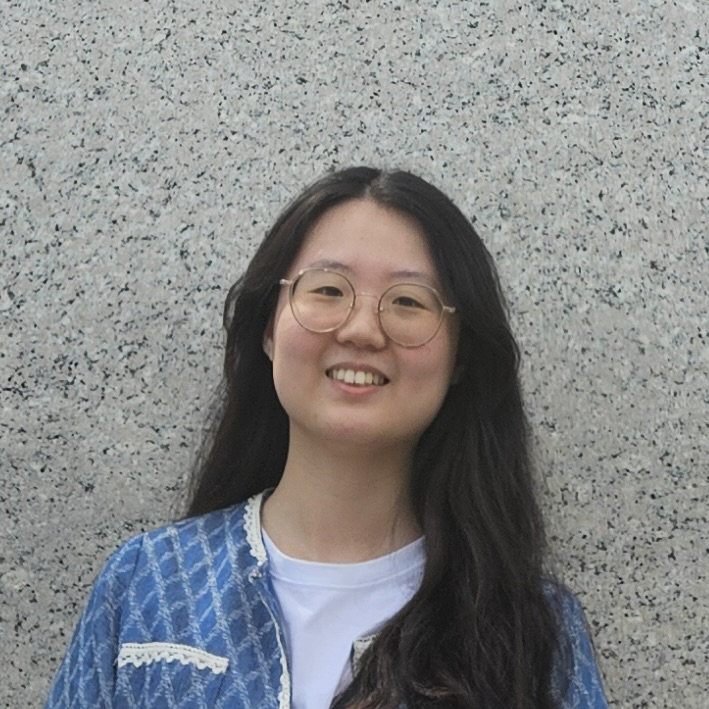
Lingjun Liu
Seeking Summer 2027 SWE internship

Lingjun Liu

I build AI agents, and I test whether they actually work.

PhD student at NC State building and evaluating agentic AI systems for software engineering, advised by Dr. Tim Menzies. I built IssueMut, a multi-agent LLM pipeline that learned from 1,760 historical bug reports and found 65 real bugs in GCC and LLVM. Now I'm studying how an agent's context shapes its performance. Before my PhD, I worked as a research engineer at Suresoft Technologies shipping C++ static analysis into a commercial product.

141
compiler bugs found
12
publications
5
awards & fellowships
4.0
PhD GPA

Things I've built

IssueMut

MSR 2026

Random fuzzing rarely reaches the code paths where real compiler bugs live — but thousands of past bug reports show exactly which paths those are. IssueMut mines 1,760 historical GCC and LLVM bug reports into structured test-case pairs, then runs a multi-agent LLM pipeline — generation, validation, and iterative-revision agents — that synthesizes 587 fuzzing mutators from real past bugs. It found 65 new bugs, 60 of which GCC and LLVM maintainers confirmed or fixed.

PythonC++LangChainGemini GCCLLVMFuzzing

Deep-learning compiler differential testing

2025 — present

Deep-learning compilers can silently diverge across execution modes and hardware — the same model may produce different results in eager vs. compiled mode, or on CPU vs. GPU. This pipeline fuzzes model graphs by generating API sequences, then differentially tests each graph across those settings to flag divergent results, parallelized via SLURM so many campaigns run concurrently on a cluster. It found 76 bugs across PyTorch, JAX, TensorFlow, and XLA, with 45 confirmed or fixed.

PythonSLURMPyTorch JAXTensorFlowXLA

MuFBDTester

STVR 2022

An automated test generator for a nuclear reactor protection system. It models Function Block Diagram programs and their mutations as SMT constraints, then solves them with Yices to derive test sequences. It detected 100% of real industrial faults, cut manual test-suite creation from days to minutes, and ran 20x faster than leading structural-coverage tools.

JavaYices SMT Mutation testingSafety-critical

Platooning LEGOs

SEAMS 2021 · Best Artifact

Research on self-adaptive systems normally relies on virtual simulations — there's a lack of physical testbeds to validate self-adaptive approaches in the real world. This open physical exemplar rebuilds the problem on LEGO hardware, so other researchers can reproduce and extend platooning experiments cheaply. It won the SEAMS 2021 Best Artifact Award.

PythonCyber-physical systems Self-adaptive systems

Where I've worked

Suresoft Technologies Inc.
Associate Research Engineer
Seongnam, South Korea
Nov 2022 — Jul 2023
  • Shipped production C++ rule checkers (AUTOSAR C++14) into a 200+ rule suite in a commercial static-analysis product used by paying customers; grew from new hire to core contributor within two months, raising rule-checker throughput roughly 3x (1-2/week to 5/week).
  • Built a backend license-validation service in Java Spring, enforcing time-limited licensing for commercial customers.
  • Designed and built a rule-description generator (Java Spring, MongoDB) with a REST API for frontend data retrieval, including the database schema.
  • Onboarded and mentored two incoming engineers through pair-programming code-preview sessions ahead of formal review.
  • Managed software packaging with Advanced Installer and partnered with QA to debug packaging-related test failures.
KAIST
Full-time Researcher
Daejeon, South Korea
Nov 2023 — Apr 2024 · Oct 2021 — Aug 2022
  • Built the core reliability computation engine (Bayesian Belief Network modeling) for nuclear safety-critical software — prototyped in R with WinBUGS and Shiny, then migrated to PyMC.
  • Designed calculation logic to determine test counts required to achieve target reliability thresholds based on pass/fail outcomes.
  • Containerized a full-stack application (Next.js, FastAPI, MySQL) with Docker and Docker Compose, and wrote a one-command deployment script automating multi-container builds.

What I work with

Languages

PythonC++JavaR

Tools & frameworks

GitDockerREST API Java SpringMongoDBSLURM LinuxAdvanced InstallerLangChain

CI / CD

JenkinsGitHub Actions

Testing & systems

Mutation testingDifferential testing FuzzingStatic analysis SMT solvers (Yices, Z3)CI / regression testing

Selected papers

Learning Compiler Fuzzing Mutators from Historical Bugs
Lingjun Liu, Feiran Qin, Owolabi Legunsen, Marcelo d'Amorim
MSR 2026 · Mining Software Repositories
Search-based Test Case Selection for PLC Systems using Functional Block Diagram Programs
Miriam Ugarte Querejeta, Eunkyoung Jee, Lingjun Liu, Pablo Valle, Aitor Arrieta, Miren Illarramendi Rezabal
ISSRE 2023 · Software Reliability Engineering
MuFBDTester: A mutation-based test sequence generator for FBD programs implementing nuclear power plant software
Lingjun Liu, Eunkyoung Jee, Doo-Hwan Bae
STVR 2022 · Software Testing, Verification and Reliability
An Empirical Study of Reliability Analysis for Platooning System-of-Systems
Sangwon Hyun, Lingjun Liu, Hansu Kim, Esther Cho, Doo-Hwan Bae
QRS-C 2021 · Software Quality, Reliability and Security
Attack-driven Test Case Generation Approach using Model-checking Technique for Collaborating Systems
Zelalem Mihret, Lingjun Liu
EnCyCriS 2021 · Engineering and Cybersecurity of Critical Systems
Platooning LEGOs: An Open Physical Exemplar for Engineering Self-Adaptive Cyber-Physical Systems-of-Systems
Yong-Jun Shin, Lingjun Liu, Sangwon Hyun, Doo-Hwan Bae
SEAMS 2021 · Self-Managing Systems Best Artifact
Development of Reliability Measurement Method and Tool for Nuclear Power Plant Safety Software
Lingjun Liu, Wooyoung Choi, Eunkyoung Jee, Duksan Ryu
TKIPS 2024 · Korea Information Processing Society
A Reliability Evaluation Tool for Nuclear Power Plant Safety Software
Lingjun Liu, Wooyoung Choi, Eunkyoung Jee, Duksan Ryu
KCSE 2024 · Korea Conference on Software Engineering Best Short Paper
MuGenFBD: Automated Mutant Generator for Function Block Diagram Program
Lingjun Liu, Eunkyoung Jee, Doo-Hwan Bae
KTSDE 2021 · KIPS Transactions on Software and Data Engineering
A Systematic Translation from PAT-based Counterexamples to Viable Test Cases
Zelalem Mihret, Lingjun Liu, Eunkyoung Jee, Doo-Hwan Bae
KCSE 2021 · Korea Conference on Software Engineering
Analysis of coupling effect hypothesis for function block diagram programs
Lingjun Liu, Eunkyoung Jee, Doo-Hwan Bae
KSC 2020 · Korea Software Congress
Automated mutant generation for function block diagram programs
Lingjun Liu, Eunkyoung Jee, Doo-Hwan Bae
KCSE 2020 · Korea Conference on Software Engineering Outstanding Short Paper

Education & awards

North Carolina State University
Ph.D. in Computer Science
Aug 2024 — May 2028 (expected) · GPA 4.0 / 4.0
Advised by Dr. Tim Menzies
KAIST
M.S. in Computer Science
Sep 2019 — Aug 2021 · GPA 3.53 / 4.3
Advised by Dr. Doo-Hwan Bae
National Tsing Hua University
B.S. in Computer Science
Sep 2014 — Jun 2019 · GPA 3.75 / 4.3
Includes an exchange year in Computer Science at KAIST (Aug 2018 — Jun 2019)
  • University Graduate Fellowship at NCSU — top graduate student fellowship (2024)
  • Best Short Paper Award — Korea Conference on Software Engineering (2024)
  • Best Artifact Award — Symposium on Software Engineering for Adaptive and Self-Managing Systems (2021)
  • Outstanding Short Paper Award — Korea Conference on Software Engineering (2020)
  • KAIST Scholarship — merit-based full support (2019)

Let's connect

I'm looking for a Summer 2027 software engineering internship, and I'm always happy to talk about agentic AI and software testing.